





By Patrick Sallia
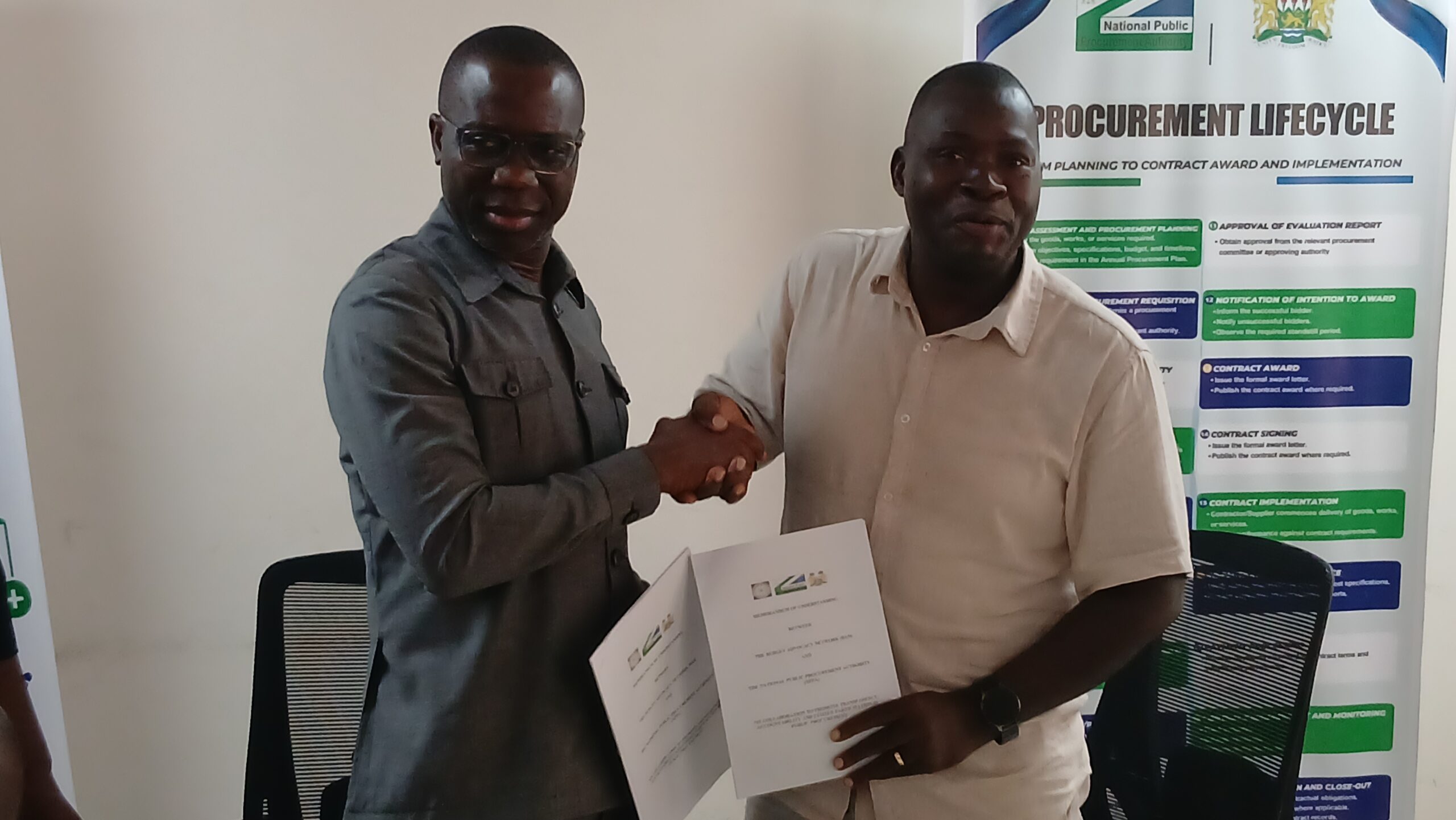
The National Public Procurement Authority (NPPA) and the Budget Advocacy Network (BAN) have signed a Memorandum of Understanding (MOU) aimed at strengthening transparency, accountability and citizen participation in public procurement in Sierra Leone.
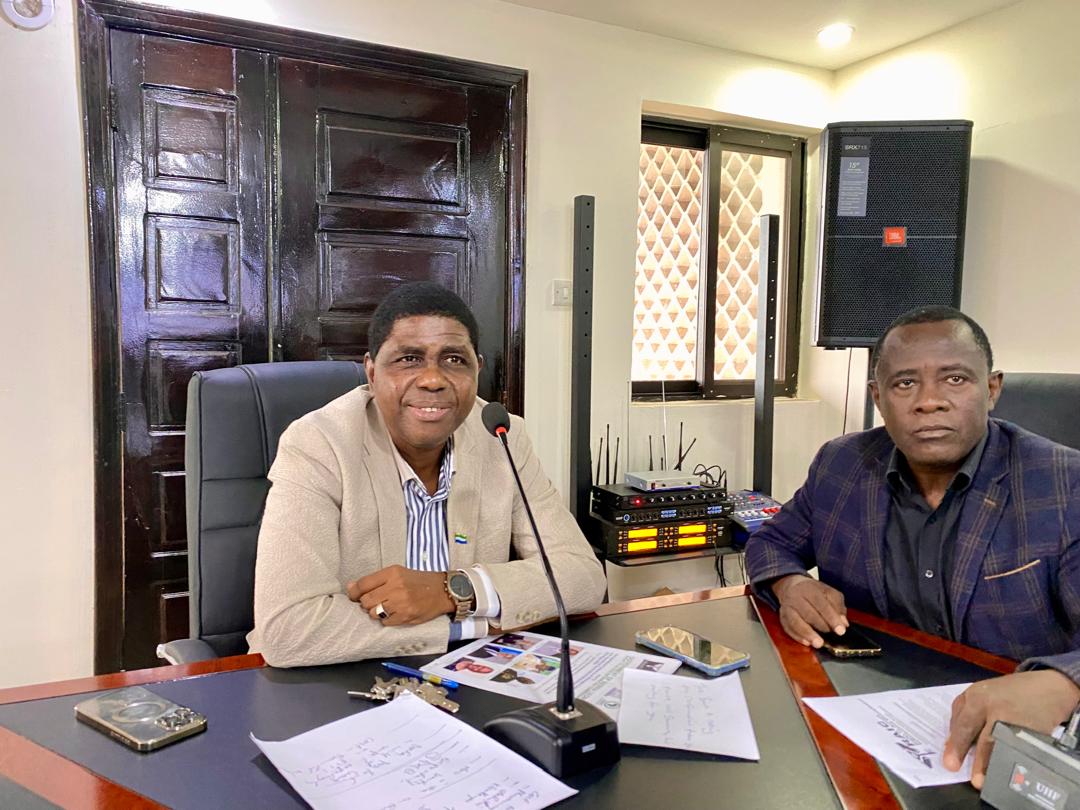
The agreement was signed on Wednesday, 30 September 2026, at the NPPA Secretariat in Freetown by NPPA Chief Executive Officer Fodie J. Konneh and BAN National Coordinator Abu Bakarr Kamara.
The partnership is expected to create greater opportunities for citizens and civil society organisations to monitor the implementation of government contracts and raise concerns where projects and services fail to meet agreed standards.
The NPPA is mandated to regulate that spending.
For years, reforms have focused on the award stage; how contracts are advertised, evaluated and awarded. But the evidence from recent Audit Service reports suggests the weakest link is no longer award, but execution.
Contracts are awarded on paper, but implementation falls short: supplies delivered below specification, works delayed, quality compromised, and public funds not translating into public services.
It is this gap that the NPPA-BAN partnership seeks to address.
According to the two institutions, the MOU creates a framework for joint sensitization, research, capacity building and public education on procurement.
A key focus is contract management, ensuring that after a contract is awarded, goods, works and services are actually delivered to standard, on time and to specification.
As NPPA CEO Chief Fodie J. Konneh noted during the engagement, effective procurement does not end with the award. Strong monitoring of implementation is essential to ensuring value for money.
The partnership also supports Sierra Leone’s ongoing procurement reform, particularly the shift from awarding contracts to the lowest bidder, to the Most Advantageous Bid (MAB) approach.
Under MAB, decisions place greater emphasis on quality, technical requirements, durability and other applicable criteria, rather than price alone — a recognition that the cheapest bid is not always the most economical in the long term.
For civil society, the MOU marks a formal entry point into procurement oversight.
BAN is a network of civil society organizations working across budgeting, procurement, accounting and auditing. It has been at the forefront of advocacy for open procurement data, use of digital systems, and public participation in public financial management.
Both institutions say improving access to procurement information and empowering citizens to monitor projects is central to fighting waste and improving service delivery.
Under the MOU, NPPA and BAN will:
– Promote transparency, integrity and citizen participation in procurement;
– Strengthen civil society oversight and government–citizen engagement;
– Identify procurement challenges based on evidence; and
– Improve access to procurement information and share knowledge.
Critically, BAN will extend oversight to villages and chiefdoms where NPPA has limited physical presence. Working with media, women, youth and traditional leaders, the network aims to “follow the money” to ensure funds meant for schools, hospitals and infrastructure reach their intended purpose.
The signing marks a milestone in state–civil society collaboration. It signals a move from a compliance-based approach focused on paperwork to a delivery-based approach focused on results for citizens.