




By: Reginald Brian Ojukutu Sawyerr
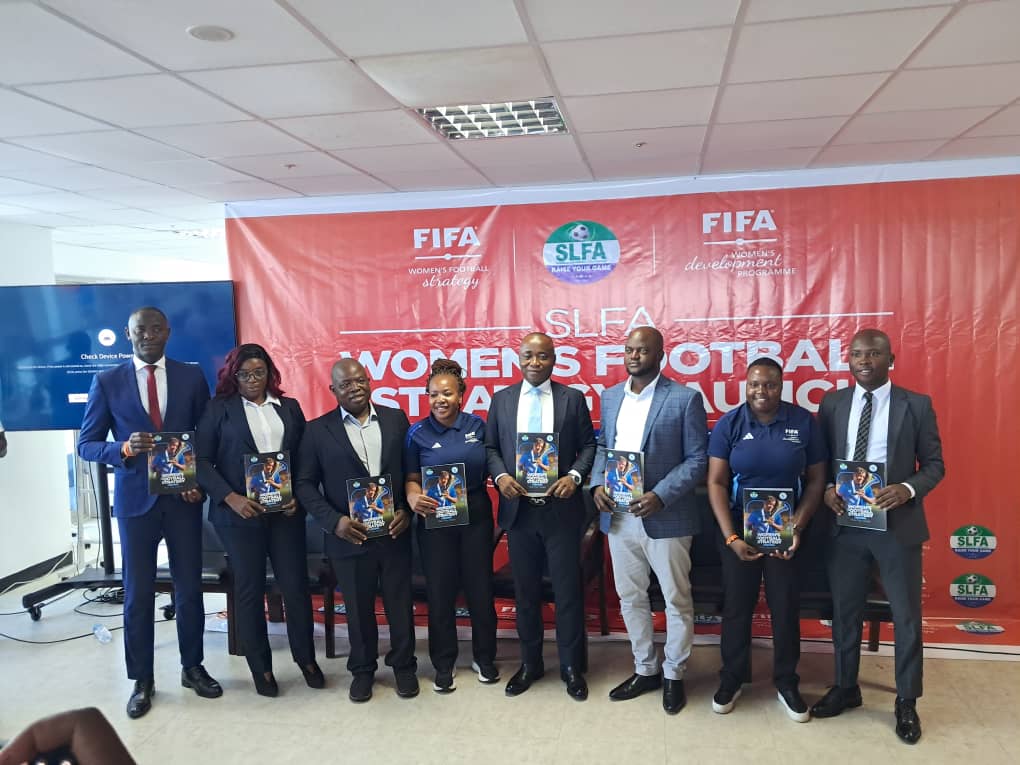
The Sierra Leone Football Association (SLFA) has launched its first-ever dedicated Women’s Football Strategy, marking a significant milestone in the country’s efforts to strengthen women’s football and create more opportunities for girls and women to participate and excel in the game.
The launch took place on Wednesday, 28 October 2026, at the 10th floor of the Freetown City Council Building, bringing together football stakeholders, representatives of FIFA and SLFA officials to celebrate what was described as a new chapter for women’s football in Sierra Leone.
Speaking at the event, SLFA President Babadi Kamara described the strategy as more than a document, stressing that its true value would depend on effective implementation and the commitment of the association’s leadership and technical staff.
He said the launch represented a clear commitment to giving women’s football the recognition and support it deserves within the country’s football development agenda.
“Today, we are not simply launching a document. We are opening a new chapter, setting a new direction, and making a clear assessment that women’s football deserves its rightful place in our national game,” Kamara said.
The SLFA President noted that football development requires more than natural talent, explaining that discipline, proper guidance, structured development and consistent monitoring are essential to achieving success at the highest level.
He emphasised that Sierra Leone possesses talented footballers but must strengthen the systems that nurture and develop them into competitive players capable of performing on the international stage.
Kamara further assured stakeholders of his administration’s commitment to implementing the strategy, adding that the association could not afford to miss opportunities to advance football development across the country.
Presenting the Women’s Football Strategy document, SLFA Women’s Football Manager Madam Elizabeth Kailey acknowledged the challenges involved in completing the process. She expressed appreciation to everyone who contributed to the development of the document, noting that bringing the strategy to completion had not been an easy task.
Kailey’s presentation marked the culmination of the work undertaken to establish a dedicated framework for the future development of women’s football in Sierra Leone.
Meanwhile, FIFA representative Thuba Subanda commended President Kamara and the SLFA leadership for taking what she described as a brave and important step towards advancing women’s football.
She praised the association for developing a clear strategic direction and encouraged stakeholders to sustain their commitment to the process, noting that not every football association succeeds in moving from planning to implementation.
Subanda expressed confidence in Sierra Leone’s ambitions, referencing the country’s progress in the 2025 competition and stating that she believed the nation could achieve its qualification ambitions by 2029 if the strategy was effectively implemented.
She also disclosed that implementation was already underway, with three programmes approved and funded. These include capacity-building activities, league competitions and festivals designed to support the development and promotion of women’s football.
According to Subanda, the availability of approved programmes and funding provides a practical foundation for turning the strategy’s objectives into tangible results.
She also acknowledged the contributions of her colleague Solo from Botswana, who was involved in developing the strategic initiative and supporting the process leading to the launch.
The FIFA representative called on football stakeholders, girls, women and male allies to work collectively to promote the women’s game and create an environment in which female players can thrive.
The launch of the strategy represents an important step towards building a more structured and sustainable future for women’s football in Sierra Leone. However, its long-term success will depend on how effectively the SLFA translates its commitments into action, expands opportunities for female players and strengthens the structures needed to compete at regional and international levels.
With the strategy now officially launched and implementation programmes approved, attention turns to delivering its objectives and ensuring that girls and women across Sierra Leone benefit from the new direction.