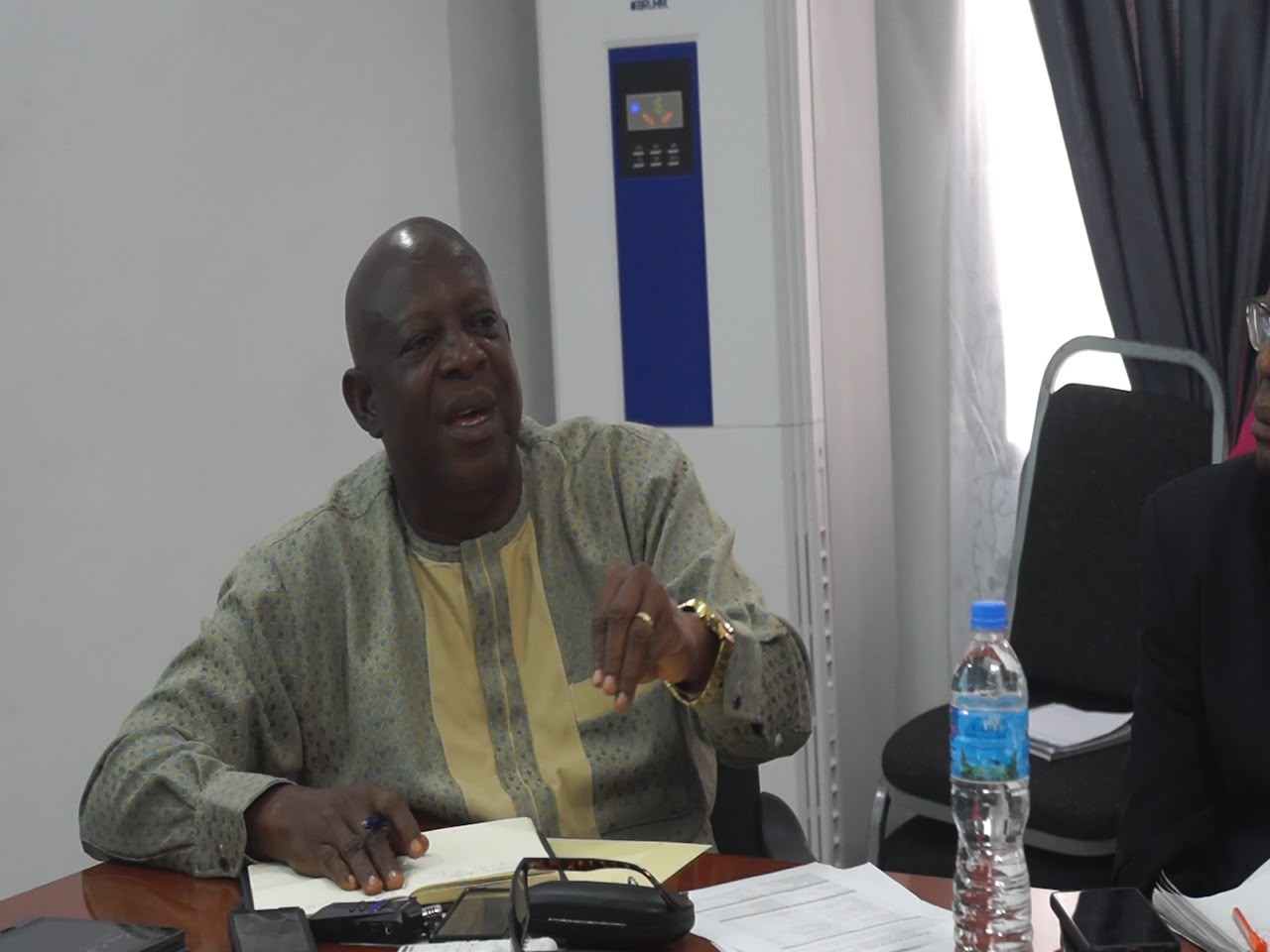



Conrad Sackey, Sierra Leone’s Minister of Basic and Senior Secondary Education, detailed the country’s strategies for enhancing the operational efficiency of its education sector during the 4th Qatar Economic Forum (QEF), held at the Fairmont and Raffles in Doha, Qatar. The event, powered by Bloomberg, featured a High-Level Dialogue on Fostering Fiscal Sustainability in Education, moderated by Education Above All (EAA).
Minister Sackey addressed the challenges his ministry faces in ensuring that funding is efficiently allocated and utilized. He highlighted issues such as data availability, monitoring and evaluation (M&E) challenges, competing demands for limited funds, communication and coordination barriers, inefficient procurement processes, and corruption. He then outlined the measures taken to address these problems.
In his remarks, Sackey reaffirmed Sierra Leone’s commitment to education and described strategies to enhance operational efficiency. These strategies include promoting results-based programming, which is embedded in the Education Sector Plan (2022-2026). Key initiatives mentioned were the Sierra Leone Education Innovation Challenge and the Education Outcomes Fund, an $18 million, three-year program aimed at enhancing foundational literacy through learning outcome assessments. Additionally, the Education Above All Educate a Child program, a $15 million initiative targeting the reintegration of 120,000 out-of-school children, was highlighted.
Sackey emphasized the importance of shifting the ministry’s focus from inputs to outputs to better track student learning. He cited examples such as the Early Grade Reading Assessment (EGRA), Early Grade Mathematics Assessment (EGMA), and the Sierra Leone Secondary Grade Learning Assessment (SGLA). To address the ad-hoc nature of these donor-led assessments, Sackey revealed plans for nationally designed assessments for grades 2 and 4.
Furthermore, Sackey discussed initiatives aimed at strengthening the education system, such as investing in teacher training to improve the quality of education and reduce the need for remediation. Over the next four years, all P1-P4 teachers will receive training in foundational learning knowledge and skills. He also highlighted progress on the national policy on Radical Inclusion, targeting historically marginalized groups.
Minister Sackey called for greater support in financing education, developing sustainable funding mechanisms, and enhancing operational efficiency.