



The Native Consortium for Accountability and Research Centre has raised concerns over the procurement, ownership, revenue management and operational performance of Sierra Leone’s 50 Waka Fine buses, calling on the relevant authorities to provide answers to outstanding questions surrounding the public transport project.
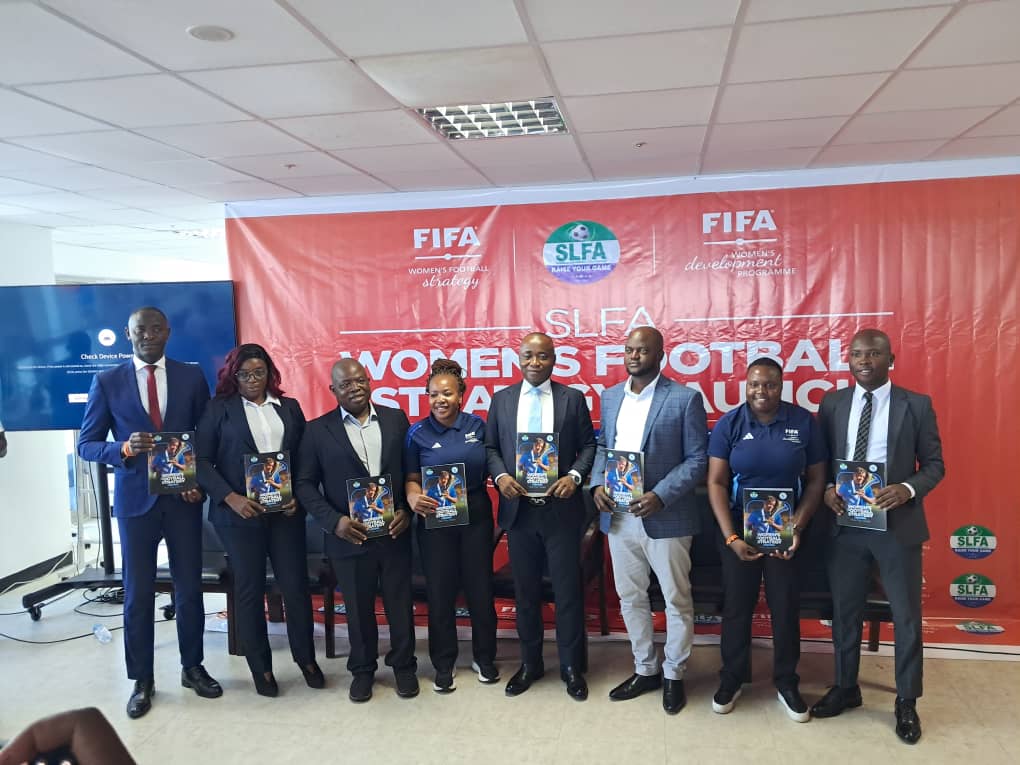
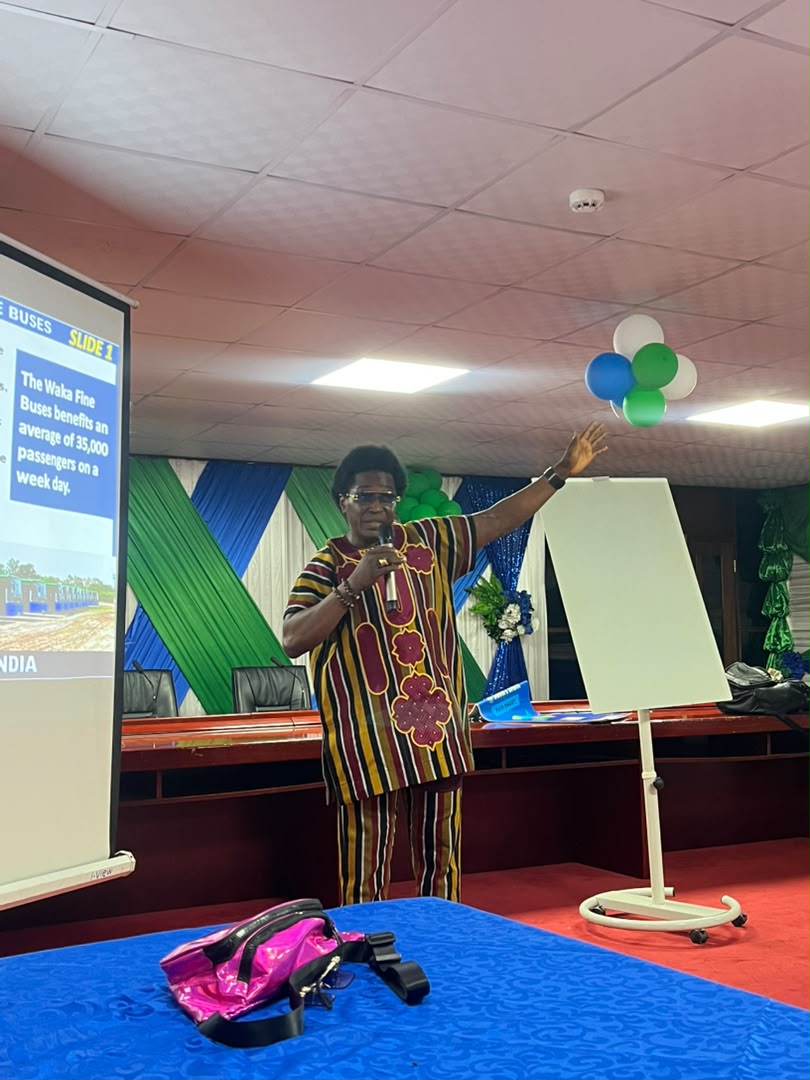
The concerns were raised on Monday, November 2, 2026, during the mini-launch of the organisation’s investigative report at Committee Room 1 of the Parliament of Sierra Leone.
The report, which followed a two-year investigation, examined the procurement and management of the 50 buses introduced under the Integrated and Resilient Urban Mobility Project (IRUMP), with particular attention to their financial and operational performance.
Presenting the findings, Executive Director of the Native Consortium, Edmond Abu Jr., said the investigation was based on empirical evidence and documentation rather than speculation, rumours or political considerations.
He disclosed that the investigation covered the procurement process dating back to 2019, while the operational assessment examined 31 months, from February 2022 to September 2024.
According to Abu, the 50 buses were procured at an estimated cost of US$7 million. He said the investigation had identified questions surrounding the revenue generated from the operation of the fleet and how the funds had been accounted for.
He presented figures indicating that approximately NLe150 million, equivalent to US$6.3 million, had been generated during the period under review. He also referred to another revenue figure of approximately NLe30 million, equivalent to US$1.2 million, which he said required further scrutiny against information provided by the relevant authorities.
The Executive Director further alleged that 11 of the 50 buses had become grounded without replacement, raising concerns about maintenance, operational efficiency and the utilisation of revenue generated through ticket sales.
He called on the relevant institutions to provide comprehensive information about the project’s financial records, revenue collection and fleet management.
The report also brought to the fore concerns among transport associations over their alleged exclusion from the ownership and management arrangements of Metro Transport Company, the entity established to operate the buses.
Osman Denkeh, an executive member of the Poda Poda and Bus Owners Association, expressed disappointment over what he described as inadequate recognition and consultation of transport stakeholders who participated in discussions leading to the establishment of the company.
He said several organisations, including drivers’ unions, passenger welfare groups and commercial transport operators, were brought together during the initial stages of the project to participate in developing the proposed operational arrangements.
According to him, the associations held discussions with the Ministry of Transport and Aviation on the procurement and management of the buses but were allegedly sidelined after the company was established.
Denkeh also questioned the reported requirement for participating associations to contribute approximately US$150,000 towards acquiring shares in the company.
He argued that the financial difficulties experienced by transport operators following the Ebola outbreak and COVID-19 pandemic had made it difficult for them to meet additional financial obligations.
He called on the Ministry of Transport and Aviation to clarify the company’s ownership structure and explain the arrangements for driver recruitment, ticket sales and the overall management of the Waka Fine service.
Similarly, Daniel James, representing the Passenger Welfare Association, questioned the relationship between Metro Transport Company and the Sierra Leone Public Transport Authority (SLPTA).
He said the respective responsibilities of the two institutions appeared unclear, warning that the lack of clearly defined operational and regulatory functions could create institutional conflicts and undermine effective public transport management.
James disclosed that the Passenger Welfare Association had made financial contributions towards ensuring that the buses commenced operations on the scheduled date of February 2.
However, he said the association remained uncertain about the benefits and formal recognition it would receive despite its involvement in the project.
He urged the government to clarify the status of participating transport organisations and define their respective roles in the operation of the service.
Meanwhile, Public Relations Officer of the Sierra Leone Drivers’ Union, Mohamed Conteh, raised further questions about the project’s funding, ownership and shareholding arrangements.
Conteh recalled that the Integrated and Resilient Urban Mobility Project commenced in 2019 with an initial funding package of US$50 million from the World Bank and the International Development Association (IDA), alongside an expected US$2 million government contribution.
He explained that the original plan envisaged the deployment of 200 buses, which was subsequently reduced to 100 and eventually 50.
According to him, the final allocation comprised 34 buses for the eastern corridor and 16 for the western corridor, based on population and transportation demand assessments.
Conteh said transport organisations were brought together with the expectation that they would collectively participate in establishing and managing Metro Transport Company.
However, he said disagreements emerged when stakeholders were reportedly asked to make additional financial contributions to purchase shares in the company.
He questioned why the associations should be required to make further substantial payments after investing time and resources in the initial discussions and establishment process.
Conteh also raised concerns about disagreements over the proposed shareholding structure, calling for a review to ensure fairness, transparency and recognition of the contributions made by participating organisations.
He appealed to the government to intervene and resolve the disagreements, insisting that the original objectives of involving transport operators in the project should be respected.
Representing Parliament, Deputy Director of the Department of Programmes, Research and Partnerships, Paul S. Turay, reaffirmed the institution’s commitment to strengthening collaboration with civil society organisations to promote transparency and accountability.
He explained that Parliament had established the Parliament-Civil Society Network (PARCISONET), through a communiqué signed between parliamentary officials and civil society representatives, to provide a structured platform for citizens’ concerns to reach Parliament.
Turay said the network had an established desk within Parliament and was supported by a steering committee co-chaired by representatives of Parliament and civil society.
He maintained that the initiative was intended to strengthen public participation in governance and enable civil society organisations to scrutinise government activities in the interest of citizens.
The report’s launch has placed renewed attention on the accountability of the Waka Fine bus project, particularly the procurement cost, revenue generated, maintenance of the fleet, ownership of Metro Transport Company and the participation of transport associations.
The Ministry of Transport and Aviation, Metro Transport Company and the Sierra Leone Public Transport Authority are now faced with questions requiring clarification on the project’s financial and operational arrangements.
These include the complete procurement process and final cost of the 50 buses, the total revenue generated since operations commenced, the accounting mechanisms for ticket sales, and the measures taken to repair or replace grounded buses.
Questions have also been raised about the actual shareholding structure of Metro Transport Company, the formal roles of participating transport associations and the respective mandates of the company and the SLPTA.
The Native Consortium’s investigation has therefore renewed calls for greater transparency in the management of a public transport initiative established to improve urban mobility and provide accessible, affordable and reliable transportation services to citizens.