


By: Osman Marah
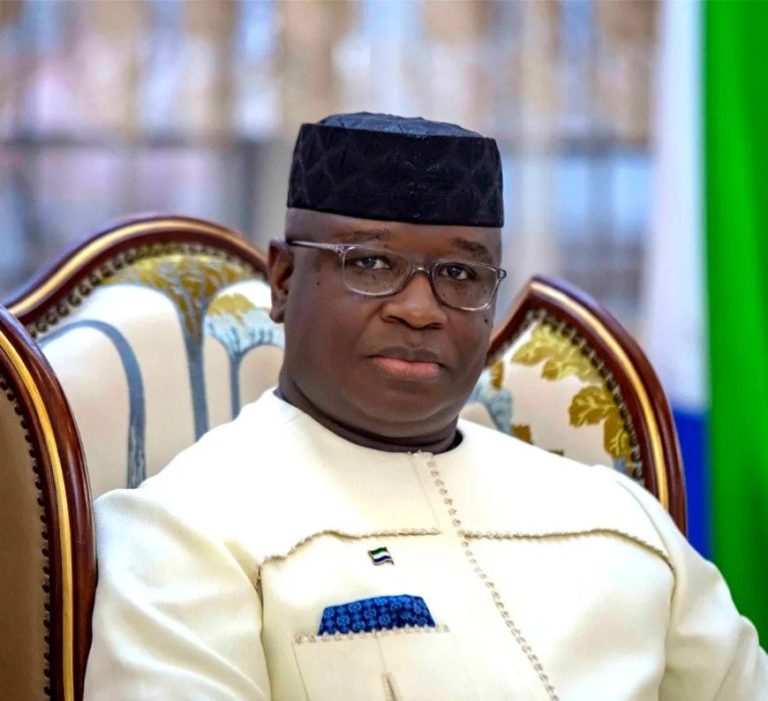
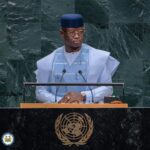
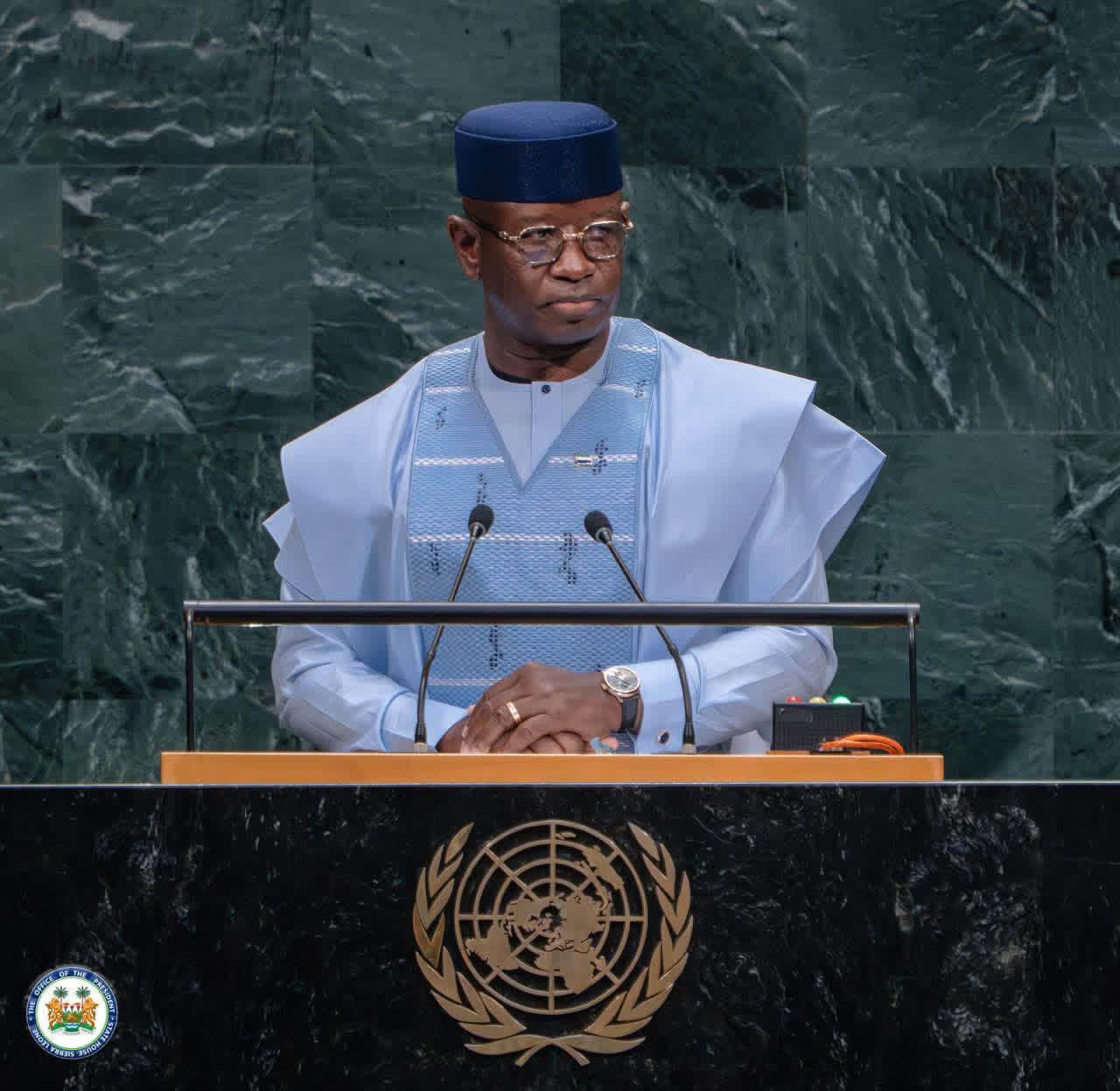
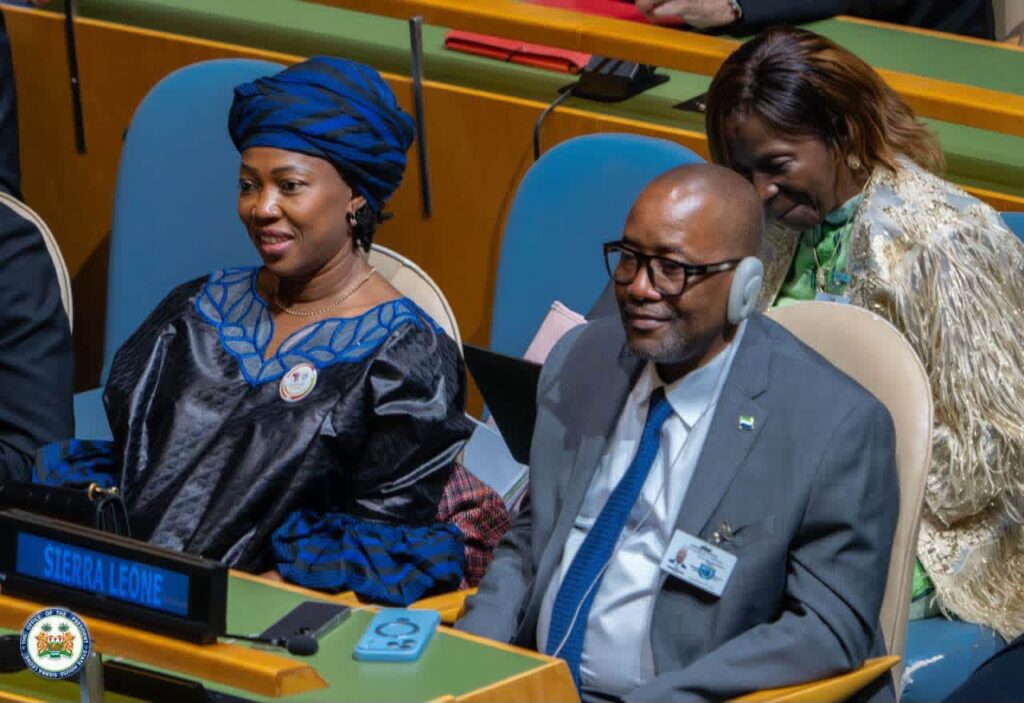
President Julius Maada Bio has called for stronger international cooperation, greater African representation in global decision-making and a more equitable international system, as he addressed the 81st Session of the United Nations General Assembly in New York on Tuesday, September 22, 2026.
Speaking before world leaders and delegates, President Bio said Sierra Leone’s experience of ending its civil war nearly 25 years ago demonstrated the importance of international cooperation, peacebuilding and trust in institutions.
He said trust must be built through respect for international law, protection of civilians, accountable institutions and promises that are honored.
Addressing major global conflicts, President Bio called for the protection of civilians and humanitarian access, while supporting the right of the Palestinian people to self-determination through a viable State of Palestine living alongside Israel in peace and security.
He also called for greater international action on the conflict in Sudan, including humanitarian access, accountability and a Sudanese-led political process. He highlighted continuing insecurity in the eastern Democratic Republic of Congo and across parts of West Africa and the Sahel.
President Bio linked global peace and development, arguing that poverty, exclusion, unemployment and weak institutions can contribute to insecurity. He referenced global military spending of about US$2.9 trillion in 2025 and questioned the imbalance between resources devoted to military expenditure and those available for development and conflict prevention.
A major part of his address focused on reform of the United Nations Security Council. President Bio said Africa, despite being home to more than 1.6 billion people and being central to much of the Council’s work, still lacks permanent representation.
He reiterated the African Common Position, calling for at least two permanent seats for Africa with the same rights and privileges of permanent membership, including the veto if the veto is retained, alongside additional non-permanent seats.
President Bio also highlighted Sierra Leone’s tenure on the UN Security Council in 2024–2025, saying the country worked to bridge divisions, address conflict-related food insecurity and strengthen the role of young people in peacebuilding.
On international finance, he called for fairer voting power and stronger representation for developing countries in international financial institutions, alongside increased access to affordable finance, concessional resources and fairer debt treatment.
The Sierra Leonean leader also renewed his country’s support for a UN Framework Convention on International Tax Cooperation, saying global taxation rules should be shaped with greater participation from developing countries.
President Bio further called for reparatory justice over the transatlantic trafficking and enslavement of Africans. He said Sierra Leone’s historical experience, including the forced transportation of Africans through Bunce Island, makes the issue particularly significant for the country.
He argued that reparatory justice should involve acknowledgement, apology, the return of cultural heritage and guarantees aimed at addressing the continuing effects of historical injustice.
Turning to Africa’s natural resources, President Bio called for greater local processing of critical minerals, technology transfer and stronger participation in global value chains. He said Africa should gain more value from the minerals that are increasingly important to the global energy transition.
He also linked youth employment to peace and development, warning that young people without jobs, skills or opportunities can become vulnerable to criminal recruitment, trafficking and dangerous migration.
President Bio highlighted Sierra Leone’s domestic initiatives, including the Feed Salone programme, free quality education and the Prohibition of Child Marriage Act enacted in 2024. He also referenced Sierra Leone’s role in establishing November 27 as the International Day for the Elimination of Child, Early and Forced Marriage.
On emerging global challenges, President Bio said developing countries must have a meaningful role in shaping rules governing artificial intelligence and other technologies. He also called for predictable climate finance, adaptation support and effective arrangements for loss and damage.
Using communities in Shenge as an example, he said climate change is already affecting families through coastal erosion and the loss of land, fishing grounds and ancestral burial sites.
President Bio also called for reforms to make the United Nations more effective, accountable and responsive. He noted that all UN Secretaries-General over the organization’s 80-year history have been men and argued that the time had come for a woman to lead the organization.
On international justice, President Bio announced Sierra Leone’s support for the candidacy of Professor Charles C. J. Jalloh, whom he described as a distinguished international jurist, for election as a judge of the International Court of Justice. He appealed for member-state support ahead of the November 3 election.
Concluding his address, President Bio said Sierra Leone’s experience of rebuilding after civil war had reinforced its belief in the value of international cooperation.
He urged the UN to ensure that the promise of equality among nations translates into meaningful outcomes for people around the world.
“Let this session give them that reason,” President Bio said, calling on the international community to restore confidence that cooperation works, international law matters and commitments made at the United Nations will be honored.