



By: James Kamara-Manneh
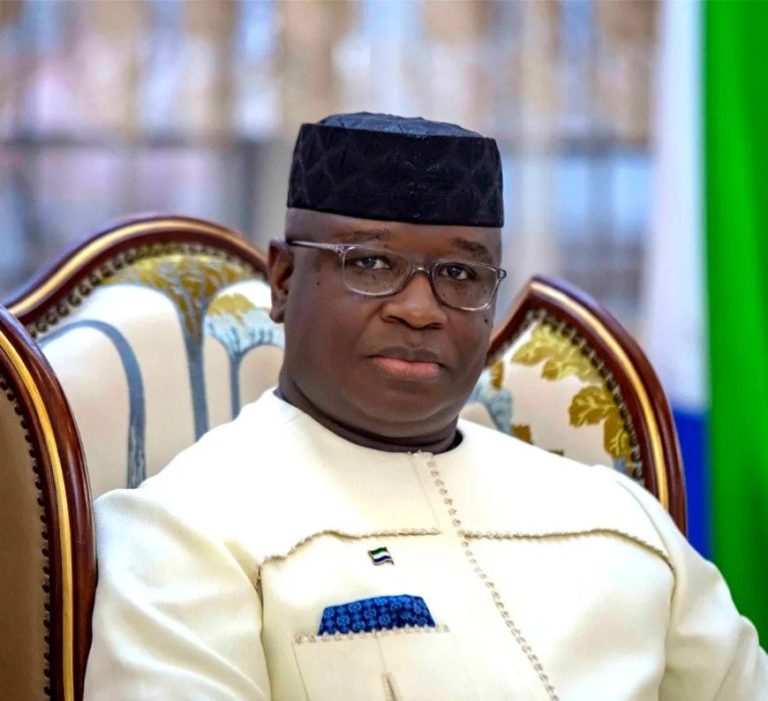
President Julius Maada Bio has referred the Constitution of Sierra Leone (Amendment) Bill, 2026, to the Supreme Court for a judicial opinion following constitutional concerns raised over its passage by Parliament.
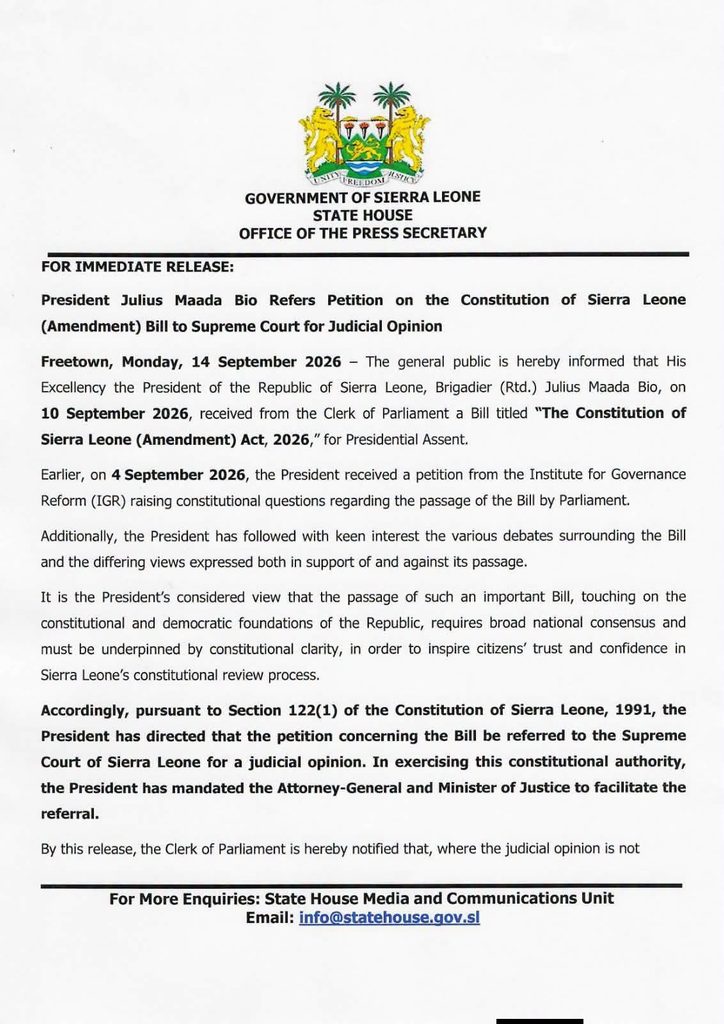
The decision was announced in a government release issued in Freetown on Monday, September 14, 2026.
According to the release, President Bio received the Bill, titled “The Constitution of Sierra Leone (Amendment) Act, 2026,” from the Clerk of Parliament on September 10, 2026, for Presidential Assent.
However, before assenting to the legislation, the President received a petition from the Institute for Governance Reform (IGR) on September 4, 2026, raising constitutional questions concerning the passage of the Bill by Parliament.
The President has now directed that the petition be referred to the Supreme Court for a judicial opinion pursuant to Section 122(1) of the Constitution of Sierra Leone, 1991.
The Attorney-General and Minister of Justice has been mandated to facilitate the referral.
The development comes amid ongoing public and political debates over the constitutional amendment legislation, with differing views expressed by supporters and opponents of the Bill.
President Bio said the passage of such an important Bill, which touches on the constitutional and democratic foundations of the Republic, requires broad national consensus and constitutional clarity.
The President’s position, according to the release, is that the constitutional review process must inspire citizens’ trust and confidence.
The referral therefore places the Supreme Court at the centre of the constitutional questions raised over the legislation, with the judicial opinion expected to provide clarity on the issues presented.
The release further notified the Clerk of Parliament of the President’s decision and the referral of the petition to the Supreme Court.
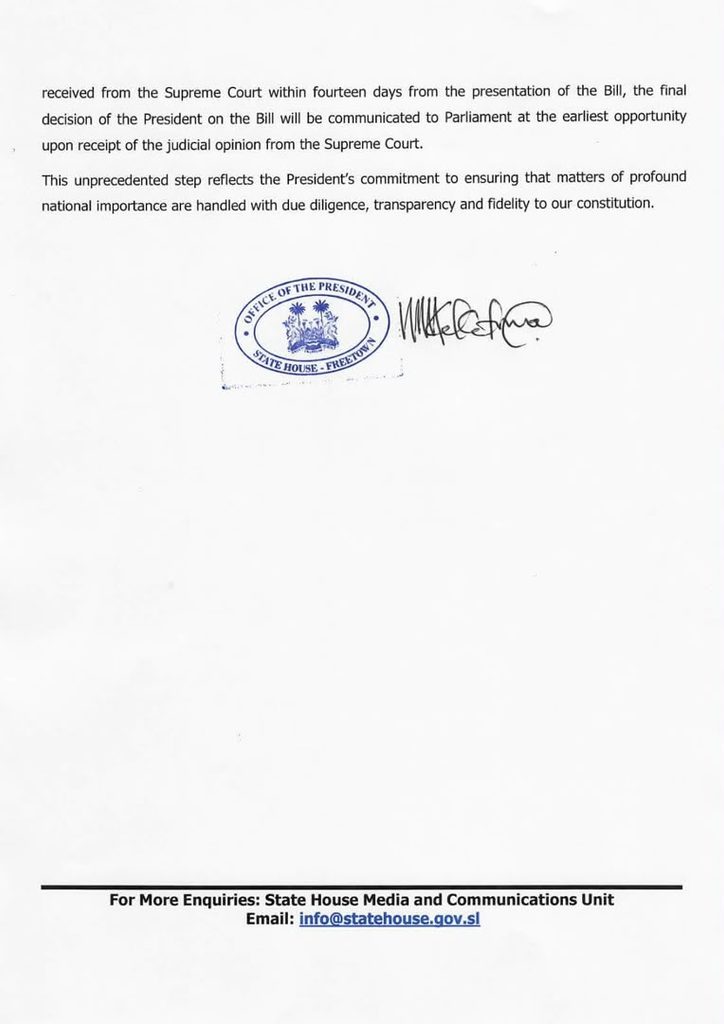
However, the government statement provided does not include the full concluding paragraph outlining the specific action to be taken if the judicial opinion is not received.
The timing of the President’s decision is significant, as the Bill has already generated national discussion over parliamentary procedure, constitutional requirements and the role of the executive in the amendment process.
The Supreme Court’s consideration of the petition is expected to focus attention on the constitutional questions raised by the IGR and the circumstances surrounding Parliament’s passage of the Bill.
For now, the legislation remains subject to the next steps in the constitutional process, as the President has opted to seek judicial clarity before proceeding with Presidential Assent.
The referral marks a major development in Sierra Leone’s ongoing constitutional debate and raises questions about the legal and democratic implications of the proposed amendment.
Further details on the Supreme Court referral and the government’s next steps are expected to emerge as the judicial process progresses.