




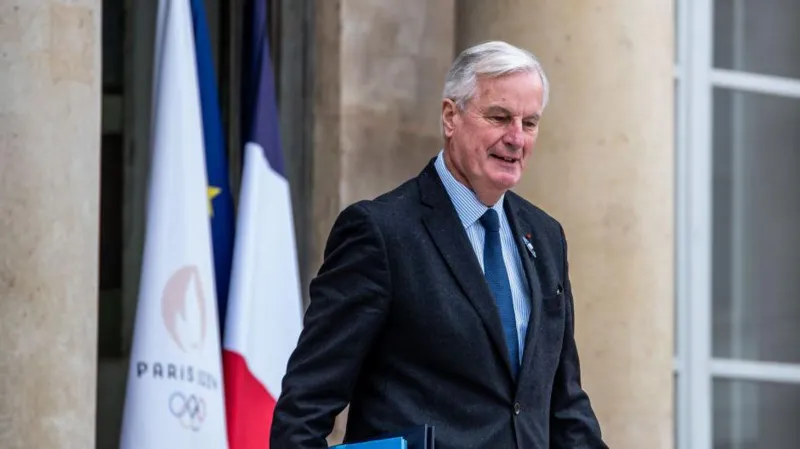
French Prime Minister Michel Barnier is set to tender his resignation today, following his ousting in a no-confidence vote hours earlier. Barnier’s government collapsed after a decisive parliamentary vote, with MPs overwhelmingly backing the motion against him, just three months after being appointed by President Emmanuel Macron.
Barnier is likely to remain in office as a caretaker while Macron selects a successor, a process that could take several weeks. Last night’s vote marked the first time in over 60 years that a French government was voted down by parliament.
The far-right National Rally (RN) and the left-wing New Popular Front (NFP) jointly censured Barnier’s government after he controversially used special powers to pass his budget without a parliamentary vote. A total of 331 MPs supported the motion, far surpassing the 288 votes needed to pass it.
As a result, Barnier is required to present his resignation, and the controversial budget, which sparked his downfall, has been automatically withdrawn.
President Macron, who recently returned from a state visit to Saudi Arabia, is scheduled to address the nation in a televised speech on Thursday evening. While the president is not constitutionally impacted by Barnier’s resignation, opposition politicians are increasingly vocal in their calls for Macron’s resignation and early presidential elections—something Macron has firmly rejected.
The NFP, which secured the most seats in the parliamentary elections, had criticized Macron’s decision to appoint centrist Barnier over their own candidate. Along with the RN, they opposed Barnier’s budget, which proposed €60bn (£49bn) in deficit reduction.
Marine Le Pen, leader of the RN, denounced the budget as “toxic for the French” and strongly supported Barnier’s removal. However, she stated that she was not calling for Macron’s resignation, although many of her allies are increasingly pushing for it. RN adviser Philippe Olivier described Macron as “a fallen republican monarch” and suggested the president’s fate was tied to an eventual parliamentary dissolution.
With no new parliamentary elections possible until July, the current deadlock in the Assembly is expected to persist, as no party appears able to secure a workable majority.