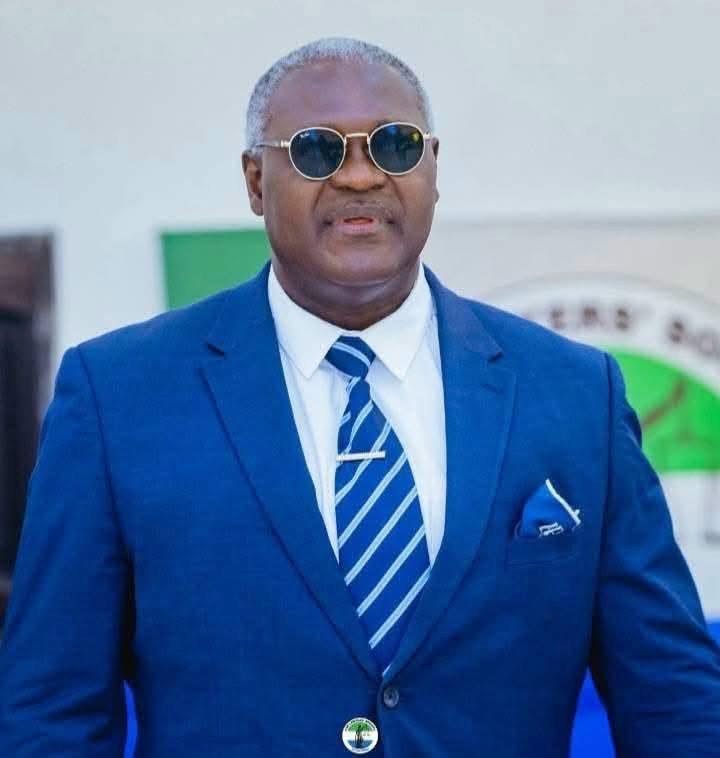






By. Joseph Momoh Conteh- Peking University, Justice Sector Coordination Office
Introduction
A year ago, on 1 September 2025, President Xi Jinping used the largest summit in the Shanghai Cooperation Organization’s history, held in the port city of Tianjin, to propose what he called the Global Governance Initiative. The world it entered has since grown rougher rather than calmer. Tariff walls have risen on both sides of the Pacific, the wars in Ukraine and Gaza have ground on while Sudan’s burns largely unwatched, and the United Nations has spent its eightieth-year rationing cash.
Anniversaries of diplomatic initiatives usually produce either applause or dismissal. Neither is analysis. I have spent recent years between two desks, one in Beijing where I research China’s development cooperation, the other in Freetown where I coordinate reform inside the justice sector, and from both desks the same question presses: what governing arrangements should 193 states build for this century, and who gets to write them? Beijing has offered an answer. On its first birthday, that answer deserves a careful reading rather than a reflex, and Sierra Leone, which has spent two years arguing for precisely this kind of reform inside the Security Council, has more standing than most to do the reading.
Why global governance needs reform
The case for reform does not depend on Chinese advocacy; the arithmetic makes it. An organization designed by fifty-one states in 1945, when most of today’s African countries were still colonies, now has 193 members governed by a Security Council whose permanent membership has never changed. Africa, with fifty-four states and about 1.4 billion people, holds no permanent seat and three elected ones. At the Bretton Woods institutions the picture is similar: the International Monetary Fund’s 2023 quota review raised resources while leaving voting shares untouched, and a third executive board chair for sub-Saharan Africa arrived only in 2024.
The economic strain is measurable. UNCTAD’s A World of Debt series counts 3.3 billion people living in countries that spend more on interest payments than on health or education, and in 2023 the same agency put the annual financing gap for the Sustainable Development Goals in developing countries at some US$4 trillion. The UN’s own 2024 progress report found a mere 17% of those goals’ targets on track. The trade referee has left the field as well: the World Trade Organization’s Appellate Body has heard no appeal since December 2019 because appointments to it are blocked, and 2025 brought the sharpest tariff escalation in decades, with retaliation to match. Meanwhile the rules for artificial intelligence are being drafted, in practice, by a handful of governments and firms, and the Stimson Center’s Global Governance Innovation Report 2026 documents a United Nations starved of cash at the very moment more is asked of it.
So the question Xi posed in Tianjin, what kind of global governance system the international community should build for the twenty-first century, is the right question whoever poses it. The argument begins over the answer.
The birth of the Global Governance Initiative
The announcement came at the “SCO Plus” session on 1 September 2025, and the date was chosen with care: two days before Beijing’s parade for the eightieth anniversary of the end of the Second World War, in the year the UN itself turned eighty. The initiative followed the Global Development Initiative of 2021 and the Global Security Initiative of 2022. A Global Civilization Initiative arrived in 2023, and the Tianjin proposal completes the set by addressing the machinery of governance itself, folding all four into Beijing’s standing formulation of a community with a shared future for humanity. Its content is five concepts: sovereign equality, the international rule of law, multilateralism, a people-centered approach and what the documents call real actions.
The first year produced more than speeches. A Group of Friends of Global Governance was launched at UN headquarters in December 2025, and Chinese state media reported forty-three member countries by January, within a wider tally of over 150 countries and organizations said to have welcomed the proposal. Those are the proposer’s own counts, and verbal welcome costs nothing. The more useful artefact is the white paper the State Council Information Office published on 17 June 2026, More Just and Equitable Global Governance: China’s Principles, Proposals and Actions, which gives the initiative its first full statement in document form and supplies the material against which it can be judged. Beijing’s motives need no romance. The largest trading nation on earth has more exposure to broken rules than anyone, and self-interest can finance public goods. A reader should hold both thoughts at once.
Understanding the five core principles
Sovereign equality
The white paper treats sovereign equality as the first principle of the UN Charter and insists that every state, whatever its size or wealth, is equally entitled to participate in global governance and to share in its benefits. It warns large powers against using strength to bully the small. For Sierra Leone this is familiar ground rather than new doctrine. Charter equality is the legal footing of the African Union’s Ezulwini Consensus, which demands at least two permanent Security Council seats for the continent, with the veto for as long as the veto exists, and five elected seats in all. A country of some nine million holds the same Charter status as one of 1.4 billion; the reform question is whether institutions built in 1945 can be made to honor that status. The test of equality sits in quota formulas and in the composition of the Council chamber, and there the 1945 settlement still holds.
The international rule of law
The paper’s argument here is blunt: confrontation persists because the Charter is applied selectively, and its purposes must be honored without compromise. One line deserves to travel. Without law applied to all, “anyone at the dining table today could appear on the menu tomorrow.” West Africans need no footnote for that sentence. We have watched the WTO’s appeals system fall silent for want of appointments and watched court opinions honored or shrugged off according to convenience. The counter-example matters just as much. Mauritius pursued its claim to the Chagos Archipelago through the International Court of Justice’s 2019 advisory opinion and reached a sovereignty agreement with the United Kingdom in 2025. Law can work for small states; it works slowly, and only for those who keep filing. The paper also calls for rules in domains where none yet bind, the deep seabed, the polar regions, outer space, cyberspace and artificial intelligence. Whether developing countries help write those rules or merely receive them is, for my generation of African officials, the live question.
Multilateralism
Here the initiative restates orthodoxy: the UN’s central position must be defended, and disputes belong in dialogue rather than in blocs. China’s own record gives the claim some weight and some irony at once. Its share of the UN regular budget grew from under one per cent in 2000 to over twenty per cent in 2025, second only to the United States, and it fields more peacekeepers than any other permanent member; the white paper counts more than 50,000 deployed across twenty-nine missions. Beijing also backed the African Union’s admission to the G20 in 2023. Yet multilateralism is a habit revealed when a power loses a vote or a ruling, and no permanent member, China included, carries a spotless record on that test. The Global South will judge the principle by conduct in the years the initiative now owns.
A people-centred approach
The fourth concept restores development to the centre of the agenda, and it lands where Sierra Leoneans live. Against the figures cited above, the white paper reports the Global Development Initiative’s record: more than 1,800 projects in its pool, 80,000 people trained, over US$23 billion in development funds mobilised and a Global Development and South-South Cooperation Fund raised to US$4 billion. Numbers of that kind invite an auditor’s questions about definitions and double counting, and they should get them. The underlying claim survives the audit. Governance systems earn their legitimacy in clinics, classrooms, grain stores and payrolls, and a reform agenda that forgets this will be written about rather than believed.
Real actions
The fifth concept is the most demanding, because it invites measurement. The first year offers entries for the record. The International Organization for Mediation, founded by thirty-two countries with its seat in Hong Kong, opened what is billed as the first intergovernmental body devoted to mediating disputes between states. A proposed World Artificial Intelligence Cooperation Organisation followed, Shanghai hosted the World AI Conference and a high-level meeting on AI governance this July, and a General Assembly resolution on AI capacity building sponsored by Beijing passed in 2024. From December 2024 China removed tariffs on goods from the least developed countries with which it has relations, Sierra Leone included, and later extended the offer to every African partner. On climate, the white paper counts RMB177 billion, about US$25 billion, provided and mobilised for South-South cooperation since 2016 across forty-three developing countries. An action standard is welcome for one reason above all: it applies to its proposer.
Why the initiative matters for Africa
Africa’s own planning documents supply the yardstick. Agenda 2063 entered its second ten-year implementation plan in 2024, and the African Continental Free Trade Area, trading since 2021, remains the continent’s largest wager on itself. What China proposes must be read against those texts, and the fit is closer than sceptics allow though looser than Beijing claims.
The economic relationship is already the continent’s largest. Chinese customs data put two-way trade at US$295.6 billion in 2024, a record, and China has been Africa’s biggest trading partner for more than fifteen consecutive years. At the Forum on China-Africa Cooperation summit in Beijing in September 2024, ties with every African partner were raised to strategic level, ten partnership actions were adopted and RMB360 billion, about US$51 billion at the time, was pledged over three years. The test that matters is composition. If African exports to China in 2035 still look like ore and crude with cashew at the margin, the partnership will have failed on its own terms; the actions on industrial chains and on agriculture exist precisely to change what crosses the sea.
The initiative’s multilateral language also creates room for tracks to reinforce one another rather than compete. Mission 300, launched by the World Bank and the African Development Bank in January 2025 to connect 300 million Africans to electricity by 2030, will need every financier it can find; a governance agenda that treats such programmes as common ground rather than rival flags would prove its worth quickly. Above all, the white paper puts a permanent member on record where Africa has argued longest. It states that Security Council reform must correct the injustice done to Africa and treat the continent’s demands as the priority case, a position that matches the Ezulwini Consensus almost clause for clause. Positions on paper are the raw material of negotiation, and Africa’s negotiators should treat this one as material to be spent in the intergovernmental negotiations in New York rather than as a compliment to be framed.
The continent has also learned, expensively, that coordination among creditors, China among them, is slow. Zambia needed the better part of four years under the G20 Common Framework to restructure its debt, and Ghana’s 2022 default took until 2024 to reach a memorandum with official creditors. An Africa that applauds initiatives will collect communiqués. An Africa that bargains as a bloc, with dates and numbers, will collect terms.
Opportunities for Sierra Leone
Sierra Leone approaches this anniversary with unusual credentials. In October 1971 we co-sponsored the resolution that seated the People’s Republic of China at the United Nations, and diplomatic relations date from July of that year. In 2024 and 2025 we sat on the Security Council, and in August 2024 we used the presidency to convene the first Council debate ever devoted to Africa’s exclusion from permanent membership, chaired in person by President Julius Maada Bio, who coordinates the African Union’s Committee of Ten on reform. The following month Washington endorsed two permanent African seats, without the veto, and the Pact for the Future adopted that September acknowledged the continent’s case. As President Bio put it to the Committee of Ten last year, “our call is not for charity but for fairness.” A small state moved a large question; that is the standing we bring to the initiative’s second year.
The practical opportunities line up against the Medium-Term National Development Plan for 2024 to 2030 and its Big Five priorities. Feed Salone can draw on an agricultural relationship older than most of the officials running it; Chinese technicians were raising cane at Magbass in the early 1980s, rice cooperation goes back further still, and the FOCAC action on agriculture and livelihoods gives that history a current instrument. Human capital development connects to scholarships, to vocational training of the Luban Workshop type and to the Confucius Institute at Fourah Bay College. Health cooperation has the longest record of all: Chinese medical teams have worked here since 1973, and the friendship hospital at Jui carried Chinese laboratory teams through the Ebola emergency. Maritime cooperation belongs on the same list, above all surveillance of our exclusive economic zone, because the fish leaving our waters uncounted pay nobody’s salary.
A caution from inside government. I have spent sixteen years on ICT and reform coordination in the justice sector, and the binding constraints on digital ambition in Freetown are rarely conceptual: they are bandwidth, electricity, maintenance budgets and scarce technicians. Any project arriving under a governance banner should be appraised on recurrent-cost realism, on documented skills transfer and on open standards. Ribbon-cuttings are not indicators.
The zero-tariff window is the most concrete offer on the table, and the constraint now sits on our side of it. Tariffs at zero move nothing until cocoa, cashew, fish and processed goods can pass Chinese sanitary and phytosanitary inspection, which requires accredited laboratories and certification systems Sierra Leone mostly lacks. A joint standards and accreditation programme with dated milestones is the specific ask Freetown should place under the initiative; it is unglamorous, and it is the difference between market access on paper and exports on ships.
Honesty is owed in both directions. Most of Sierra Leone’s external debt is owed to multilateral lenders and the Chinese share is modest; research led by Deborah Brautigam at Johns Hopkins University concluded in 2020 that the debt-trap story lacked evidential support in Africa. That finding settles a slogan and settles nothing else. Loan agreements should be published and projects should pass through Parliament, and the argument over the fish harbour at Black Johnson taught officialdom that Sierra Leoneans expect environmental and social assessments before ground is broken. That expectation should bind every partner, whatever flag flies over the financing.
Challenges and the road ahead
None of this dissolves the hard problems, and pretending otherwise would waste the reader’s trust. The first is rivalry. Washington and several European capitals read the four initiatives as order-building under another name, and endorsement counts compiled in Beijing will change no minds there; principles drafted at a level of generality every state can sign are also principles every state can evade. The proof sceptics want is behavioural: how the proposer conducts itself in disputes where it holds the stronger hand. Money is the second problem. The UN’s cash crisis shows that even governance everyone has already agreed upon goes unfunded, and new architecture without new resources merely rearranges furniture. Inertia is the third. Member states have negotiated Council reform since the early 1990s without producing a single draft text, because the incentives of those already seated at the table have not changed. And a fourth risk deserves naming: parallel structures. If new bodies drain energy from the UN rather than feed it, fragmentation will arrive wearing reform’s clothes.
These risks yield to negotiating craft rather than to faith or to cynicism. Tie every new mechanism to the UN, and demand commitments carrying amounts, dates, baselines and review clauses. Keep the channels open across the rivalry as well, because the alternative on offer in 2026, visible any morning in the tariff schedules and the casualty lists, is worse.
Conclusion
Commemorations in diplomacy are worth whatever follows them. Read at its best, the Global Governance Initiative restates the Charter and attaches an implementation clause; read at its worst, it is a bid for standing dressed in everyone’s favourite principles. A year of evidence supports a verdict in between: a genuine agenda, unevenly proven, whose value to a state like ours depends on what we negotiate under it. The venues are already open. The intergovernmental negotiations on the Security Council continue in New York, WTO members are arguing over how to restore appeals, the AI capacity-building agenda is being written now and FOCAC’s partnership actions run to 2027. Sierra Leone belongs in each of those rooms with a short list and a long memory, and with its own house in order, because standards regimes and procurement discipline, published contracts and audited accounts, are what let cooperation land on firm ground.
Fifty-five years ago this October, Sierra Leone helped vote the People’s Republic of China into the United Nations. The request now runs the other way: help vote the wider Global South into the rooms where the rules are written, and hold every author of every initiative, Beijing included, to the standard the white paper sets for others. Real actions, verified by results.